
Price €16.80
Coffee KSF Limmu Bedaye...
ETHIOPIA - 250g
Whole bean coffee is the promise of a vibrant cup, freshly ground by you just before brewing. At Terres de Café, every coffee bean is selected for its terroir, altitude and SCA score – from exceptional coffees (85+) to the finest Grand Cru coffees (88+), as well as our balanced coffee blends and organic coffees sourced from agroforestry farms.
Whole coffee beans preserve their aromas far better than ground coffee, delivering an intensity and freshness that are hard to match. Discover our selection of whole bean coffees.
```
There are 74 products.
ETHIOPIA - 250g

COLOMBIA - 250g
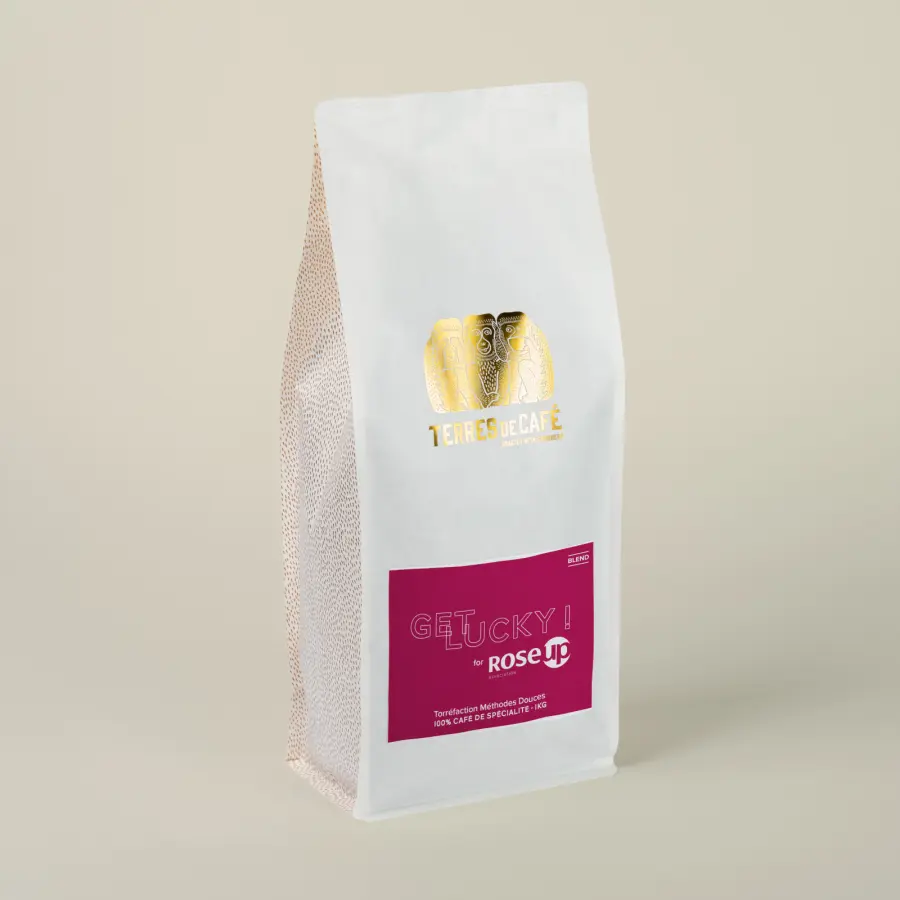 new
new Get Lucky

NICARAGUA - 250g

BRAZIL - 250g

BOLIVIA - 250g

COLOMBIA - 250g

SALVADOR - 250g

ETHIOPIA - 250g

Rwanda - 250g

Colombia - 250g

ETHIOPIA - 250g

ETHIOPIA - 250g

NICARAGUA - 250g

ECUADOR

ETHIOPIA - 250g

NICARAGUA - 250g

COSTA RICA - 250g

ETHIOPIA - 250g

Colombia - 250g
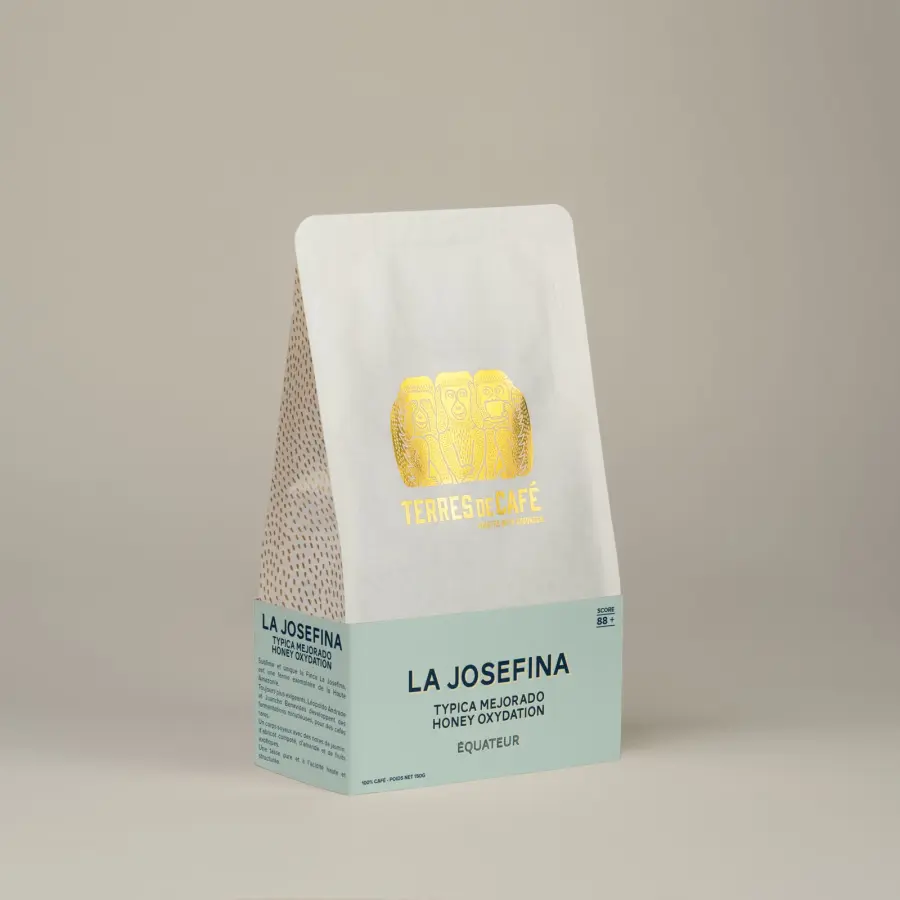
ECUADOR - 150g

Colombia

COLOMBIA - 250g

ETHIOPIA - 250g

BRAZIL - 250g

Honduras -250g

Colombia - 150g

COSTA RICA - 150g

ECUADOR - 200g

Colombia - 250g

Salvador - Kenia Natural
150g

Ecuador - Sidra Washed
20g / 150g

Guatemala - Geisha Washed "Geisha Del Bosque"
150g

NICARAGUA - 250g

ECUADOR - 200g

Perou- 250g

Costa Rica - Geisha Anaerobic Natural
200g

COLOMBIA - 250g

TERRES DE CAFE
2X250g

Peru - Geisha Washed Anaerobic
200g

Yemen - Kent Carbonic Honey
100g

Panama - 150g

TERRES DE CAFE
2X250g

Peru - Geisha Washed
150g

Panama - Geisha Dark Night
20g / 100g

Peru - Geisha Washed Anaerobic
200g

TERRES DE CAFE
2X250g

Peru - Geisha Washed
200g

Colombia - Java Hydrohoney - Competition Lot
100g

Colombie - Chiroso Hydrohoney - Competition Lot
100g

TERRES DE CAFE
2X200g

TERRES DE CAFE

BLEND - 250g

BLEND - 250g

ETHIOPIA - 250g

ETHIOPIA - 250g

BLEND - 250g

BLEND - 1kg

BLEND - 1kg

BOLIVIA - 250g

BLEND - 1kg

BRAZIL - kg

NICARAGUA - 1kg

COLOMBIA - 250g

ETHIOPIA - 1kg

SALVADOR - 1kg

ETHIOPIA - 1kg

Rwanda - 1kg

ETHIOPIA - 1kg

ETHIOPIA - 1kg

BLEND - 1kg

NICARAGUA - kg

COSTA RICA - 1kg

MEXICO -150g
Whole bean coffee is coffee in its freshest and most vibrant form: roasted, intact, and ready to reveal its full potential when freshly ground.
It all starts at altitude. Hand-picked from coffee trees grown in agroforestry systems, often at elevations above 1,500 metres, the coffee beans then make their way into the hands of the roaster.
At Terres de Café, roasting takes place near Paris, in our artisanal roastery, where every batch is carefully monitored to ensure precision and consistency.
Ideally, the beans should be ground just before brewing. This simple step helps preserve the full aromatic complexity and freshness of the coffee.
Choosing the right whole bean coffee starts with understanding what lies behind each variety. Coffee beans fall into two main families, each offering distinctly different flavour profiles and levels of intensity.
| Variety | Flavour Profile | Intensity | Caffeine Content |
|---|---|---|---|
| Arabica | Sweet, fruity, floral | Moderate | Low (1–1.5%) |
| Robusta | Bitter, cocoa notes | High | High (2–4%) |
| Arabica/Robusta Blend | Balanced complexity | Variable | Medium |
Choosing the right whole bean coffee means paying attention to a few essential factors.
First comes origin. South American coffees are often associated with round, chocolatey flavours, while African coffees tend to offer citrus and floral notes.
Next comes intensity and the overall flavour profile. From light, fruity beans to bold, smoky coffees, there is a wide spectrum to explore. Some coffee lovers prefer a delicate, almost tea-like cup, while others want a coffee powerful enough to stand up to milk. Both preferences are equally valid.
Freshness also plays a major role. Look for a recent roasting date, ideally within the past six weeks.
Finally, consider the roast level: a light roast highlights delicate, transparent flavours, while a darker roast delivers greater intensity and a longer finish.
Certifications can indicate that coffee has been produced without synthetic chemical pesticides and that producers have received a fair price for their harvest.
However, not all certifications follow the same standards, and some apply more demanding requirements than others when it comes to inspections and on-the-ground controls.
Coffee farms managed through agroforestry help preserve tree canopies, support biodiversity and store carbon.
Choosing responsibly sourced coffee also means supporting farming families who cultivate their land with a long-term perspective, often across several generations.
Few products make the connection between what is in your cup and the land it comes from quite as visible. Beyond flavour itself, this relationship between coffee, people and terroir is one of the most remarkable aspects of the coffee industry.
Contrary to popular belief, a dark roast does not necessarily contain more caffeine. Coffee beans roasted for longer periods can actually lose a small proportion of their initial caffeine content during the roasting process.
A lightly roasted, high-altitude Arabica may contain around 1.2% caffeine, while Robusta coffee beans often contain more than 2.5%.
Supercritical CO₂ decaffeination can preserve the coffee's aromatic profile particularly well compared with some chemical-solvent extraction methods.
The result in the cup can remain remarkably close to the original coffee, especially when high-quality beans are carefully processed and roasted.
So, if you think decaf coffee beans inevitably mean bland coffee, it may be time to reconsider.
| Format | Average Caffeine Content | Control Over Dosage | Coffee Freshness |
|---|---|---|---|
| Whole bean coffee (espresso) | 60–80 mg per cup | Full control (grind, dose) | Maximum when freshly ground |
| Whole bean coffee (filter) | 80–120 mg per cup | High | Maximum |
| Standard coffee capsules | 55–75 mg per cup | None | Pre-dosed, limited oxidation |
| Decaf capsules | 3–8 mg per cup | None | Pre-dosed |
| Criterion | Whole Bean Coffee | Coffee Capsules |
|---|---|---|
| Cost per cup | €0.15–€0.50 | €0.35–€0.55 |
| Cup quality | Maximum freshness, preserved aromas | Standardised flavours |
| Convenience | Grinding required | Immediate |
| Control over intensity | Full | Limited |
Whole bean coffee generally produces significantly less packaging waste than individual plastic or aluminium capsules.
Each single-use capsule can represent around 3 grams of non-biodegradable material per cup. By comparison, coffee beans packaged in a recyclable kraft bag offer a much more minimal packaging format.
Over the course of a year, the difference can become particularly significant for regular coffee drinkers.
The grind size has a major impact on the final cup.
For espresso, the grind should be fine and consistent. Freshly ground coffee can then produce a dense crema and clearly defined aromas from the first seconds of extraction.
If the grind is too coarse, the espresso may taste thin and watery. If it is too fine, excessive bitterness can dominate the cup. Finding the right balance often requires a few adjustments.
Grinding your coffee beans just before brewing can dramatically improve the final result.
It is one of the simplest pieces of advice in coffee preparation, yet also one of the most frequently underestimated.
Poorly stored whole bean coffee can quickly lose its aromatic qualities. Proper storage is therefore essential if you want to preserve freshness and flavour.
Storing coffee beans in the refrigerator is a common mistake. Temperature changes and exposure to moisture can negatively affect the aromatic compounds in the beans.
Freezing coffee requires more care: when properly portioned and stored in airtight packaging, freezing can be used as a longer-term preservation method, but repeated temperature changes should be avoided.
Buying whole bean coffee from a specialty or artisanal coffee roaster gives you access to greater traceability and a direct connection with the people who select and roast each batch.
Larger coffee brands, meanwhile, can provide greater consistency, although they may not always offer the distinctive character of a specific origin or terroir.
Both approaches have their advantages. Ultimately, it depends on what you are looking for in your cup: sometimes consistency matters most, while at other times discovering something completely new is part of the experience.
Look for coffee retailers and roasters that clearly provide information about the roasting date, precise coffee origin, traceability and organic or Fair Trade certifications where applicable.
Transparency about where the coffee comes from, how it was produced and when it was roasted can be a strong indicator of quality and responsible sourcing.
```