
Price €11.90
Coffee Classic Espresso
BLEND - 250g
A well-crafted coffee blend is the art of combining several origins to create a cup that is balanced, consistent and full of character. At Terres de Café, each coffee blend is created by Christophe Servell with a precise approach to coffee: selecting Arabica coffee beans grown using agroforestry practices and roasting them near Paris to preserve their aromas of chocolate and ripe fruit.
The result in the cup? A golden, persistent crema and a well-balanced structure that performs beautifully both as espresso and filter coffee. Discover our selection of exceptional coffee blends and find the blend that best suits your taste.
There are 12 products.
BLEND - 250g

BLEND - 250g

ETHIOPIA - 250g

ETHIOPIA - 250g

BLEND - 250g

BLEND - 1kg

BLEND - 1kg

BLEND - 1kg

ETHIOPIA - 1kg

ETHIOPIA - 1kg

BLEND - 1kg
 new
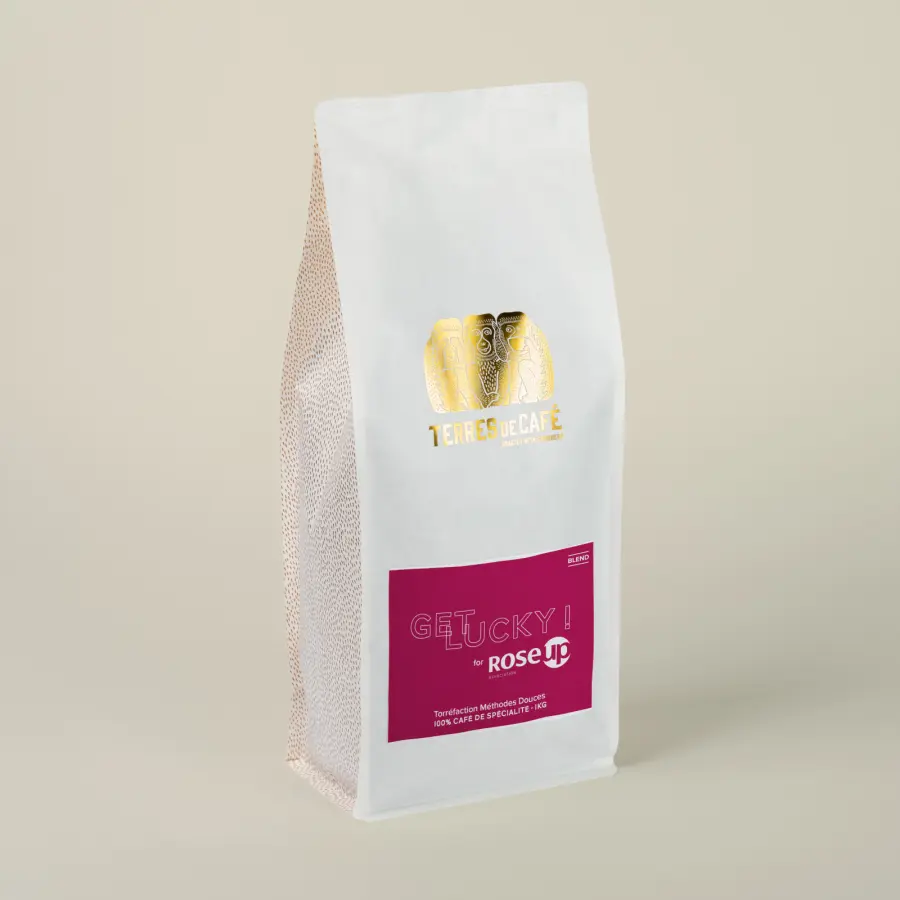
new Get Lucky
A coffee blend begins with an intention. It brings together coffees from several origins in a single blend – sometimes from three different continents – to create one distinctive flavour profile.
The roaster selects complementary coffees to build a cup that is balanced, consistent and recognisable over time. Creating a successful blend requires both precision and sensitivity, as each component must contribute to the overall balance without overpowering the others.
While a single-origin coffee expresses the character of one specific terroir or origin, a coffee blend expresses the character of a carefully constructed recipe. Neither is inherently better than the other: they simply represent two different approaches to coffee.
Behind every carefully crafted coffee blend lies a precise process. Several key stages distinguish a well-designed blend from a simple mixture of coffee beans:
The composition of a coffee blend plays a major role in determining its flavour, body, intensity and texture in the cup.
A 100% Arabica blend generally focuses on aromatic finesse and complexity. Notes of dried fruit, flowers and cocoa can combine with delicate acidity and a smooth, silky body.
By combining several Arabica origins, the roaster can create a balanced profile while retaining the distinctive aromatic qualities associated with each coffee.
Adding Canephora, commonly known as Robusta, to an Arabica blend can increase body, bitterness and intensity while often contributing to a denser, more persistent crema in espresso.
This style of blend is particularly popular among coffee drinkers looking for a powerful espresso with a fuller texture and pronounced character.
| Component | Main Contribution | Character in the Cup |
|---|---|---|
| High-altitude Arabica | Aromatic complexity, vibrant acidity | Fruity notes, cocoa, dried fruit |
| Brazilian Arabica | Rounded body, sweetness | Smooth base, overall balance |
| Canephora | Crema, caffeine, intensity | Pronounced bitterness, fuller texture |
Each origin therefore serves a specific purpose within the recipe. In a carefully constructed coffee blend, every bean contributes to the final balance.
A well-crafted coffee blend can often be recognised by its balance and consistency in the cup. Notes of dark or milk chocolate can bring sweetness and roundness, while lighter roast profiles may reveal red fruit, hazelnut or caramel notes depending on the coffees used.
In espresso, the crema contributes to the texture and visual appearance of the cup. Its density, colour and persistence can vary according to the coffee varieties, freshness, roast profile and extraction parameters.
Traditional Italian-style coffee blends are generally associated with darker roast profiles designed to produce an intense body and flavours such as dark chocolate, roasted nuts and sometimes tobacco-like notes.
Specialty coffee blends, by contrast, can use lighter or medium roast profiles to highlight the aromatic complexity of carefully selected Arabica coffees and their individual origins. The result is two very different approaches to the blended coffee experience.
| Blend Style | Roast Profile | Flavour Profile | Ideal Brewing Method |
|---|---|---|---|
| Italian-style blend | Dark | Full-bodied, chocolate, roasted notes | Short espresso, intense coffee |
| Specialty coffee blend | Light to medium | Fruity, floral, dried fruit, vibrant acidity | Filter coffee, nuanced espresso |
| 100% Arabica blend | Medium | Balanced, smooth, sweet | Suitable for multiple brewing methods |
Choosing the right whole bean coffee blend depends on both your brewing equipment and your personal taste.
For an espresso machine, medium to darker roast profiles can provide greater body, intensity and a generous crema. If you prefer smoother, fruitier and more delicate flavours, a 100% Arabica blend may be more suitable, with tasting notes ranging from dried fruit and milk chocolate to floral or fruity aromas.
Freshness is also important. Check the roasting date whenever it is available and store your coffee properly after opening. Coffee's aromatic profile naturally evolves over time, so enjoying it relatively soon after roasting and grinding only when needed can help preserve its flavours.
Creating your own coffee blend at home requires a little experimentation, but it can be an excellent way to understand how different origins interact in the cup.
A useful starting point is to choose a main Arabica coffee representing around 70 to 80% of the total blend. This provides the aromatic foundation. A second coffee can then be added to adjust sweetness, acidity, body or intensity.
These proportions are only a starting point: the ideal recipe depends on the coffees used, their roast profiles and your preferred brewing method.
One of the main challenges when creating a blend is assuming that every coffee behaves in the same way during roasting. Bean density, altitude, variety and processing method can all affect how a coffee reacts to heat.
For home blending, it is generally easier to work with coffees that have already been roasted separately and then experiment with different proportions. This allows you to adjust the recipe directly according to the results in the cup.
If you are roasting your own coffee, allowing freshly roasted beans to rest before tasting can also be beneficial. The ideal resting period varies considerably depending on the coffee, roast profile and brewing method.
Yes. A coffee blend can be organic, Fair Trade or carry other certifications provided that the coffees used and the production process meet the requirements of the relevant certification.
Blending different origins does not prevent a coffee from meeting environmental or social sourcing standards.
A whole bean coffee blend should be stored in a properly sealed container or resealable coffee bag, away from heat, moisture and direct sunlight.
Its aromatic qualities will gradually evolve after roasting and particularly after the package has been opened. Grinding only the amount of coffee needed immediately before brewing is one of the best ways to preserve its aromas for longer.
Yes. Some specialty and artisanal coffee roasters offer decaf coffee blends designed to maintain a balanced and complex flavour profile without the usual caffeine content.
Several decaffeination methods are available, including processes using water or supercritical CO2. The final flavour depends not only on the decaffeination process but also on the quality of the green coffee, roasting and preparation.